
Daredevil: a fool for grace
Questioning Daredevil: Born Again's commitment to mercy and forgiveness [Spoilers]

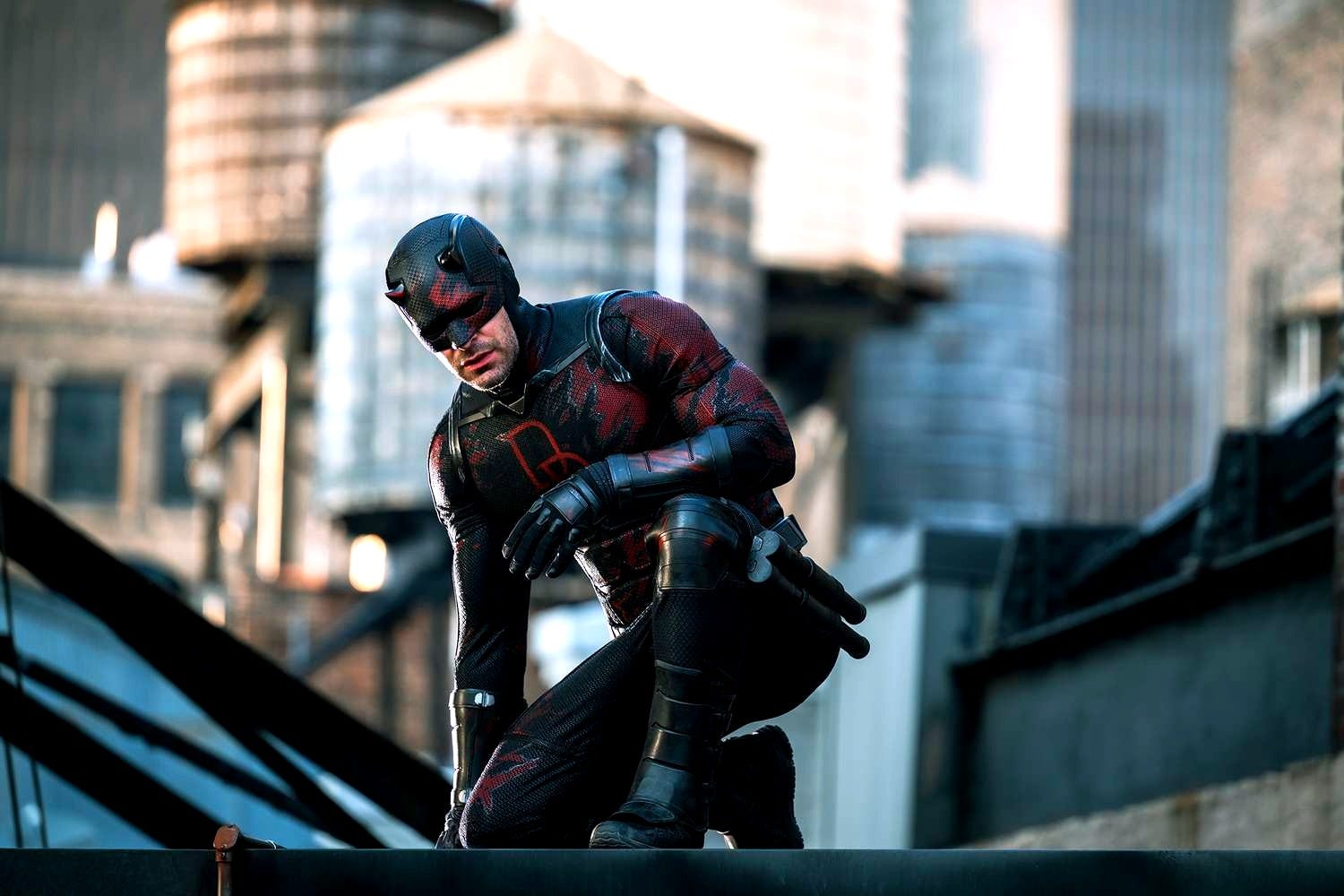
Daredevil: Born Again Season 2 was not the hell I suspected it would be at the conclusion of Season 1. At least not until the final episode.
The finale, “The Southern Cross,” was something far different. Let’s catch up.
A familiarity with the Daredevil and Daredevil: Born Again adaptations will benefit this reading.
Season 1 concluded with Daredevil (blind lawyer-vigilante Matthew Murdock, played by Charlie Cox) realizing that Kingpin-turned-NYC Mayor Wilson Fisk (Vincent D’Onofrio) couldn’t be taken down by just another back-alley brawl and a couple of twists of legal luck. Daredevil needed an “army” and wanted to wage “war.”
My fear for Season 2 was that the show would devolve into an ever-intensifying series of fisticuffs between Daredevil’s allies and Fisk’s brutal and lawless Anti-Vigilante Task Force. Fortunately (for my sanity), that didn’t happen. Season 2 threaded a few plotlines that kept me attuned, if not, at times, completely intrigued.
Daniel Blake, Fisk’s young and fortunate communications strategist, learns there’s more to politics than posh parties and high living. He’s caught between Buck Cashman, Fisk’s grim reaper who attempts to draw him deeper into the conscience-searing sea of darkness and BB Urich, a sly, fashionable, justice-minded independent journalist who is manipulating Daniel for the greater good. Fortunately, love weakens Daniel’s boyish heart. He meets his end after allowing BB to slip away from Buck’s clutches.
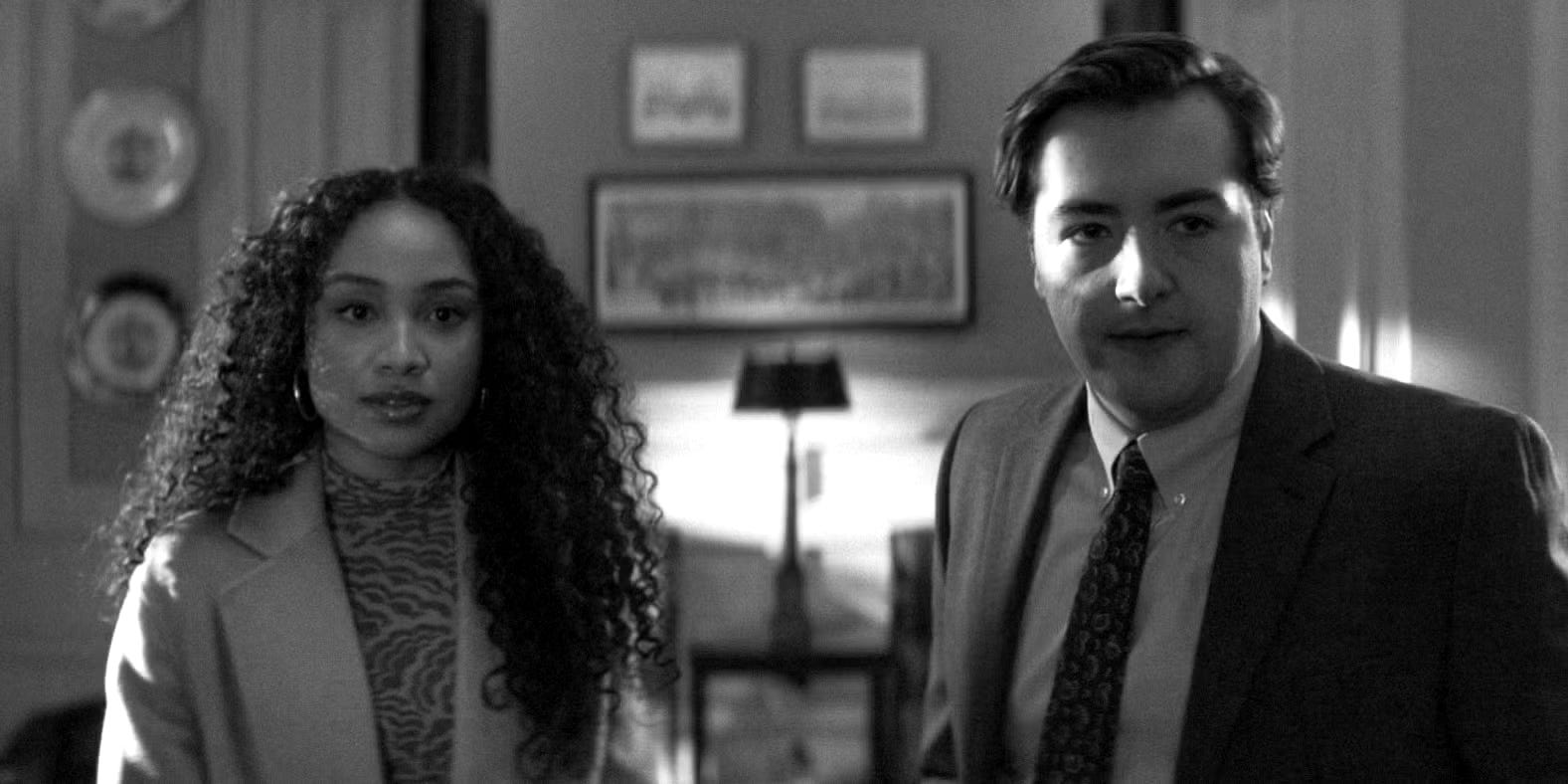
Heather Glenn, a therapist (turned “criminal psychologist”), keeps close counsel with Fisk’s inner circle, supporting the mayor’s pursuit of “justice” against alleged vigilantes by (dishonestly) portraying them as psychologically unwell in court. Meanwhile, she privately struggles with traumatic memories of assault by the serial killer Muse. And the series ends with her putting on Muse’s mask. (Heather, I think you need therapy.)
Meanwhile, Fisk is doing Fisk things. Smuggling weapons to arm his task force. Plotting the governor’s assassination. Blowing up a ship in New York’s harbor and blaming it on Daredevil. Being enraged. Being weak—and then further enraged—when Bullseye kills his wife Vanessa as a weird get-back for her manipulating him into killing Daredevil’s friend Foggy Nelson.
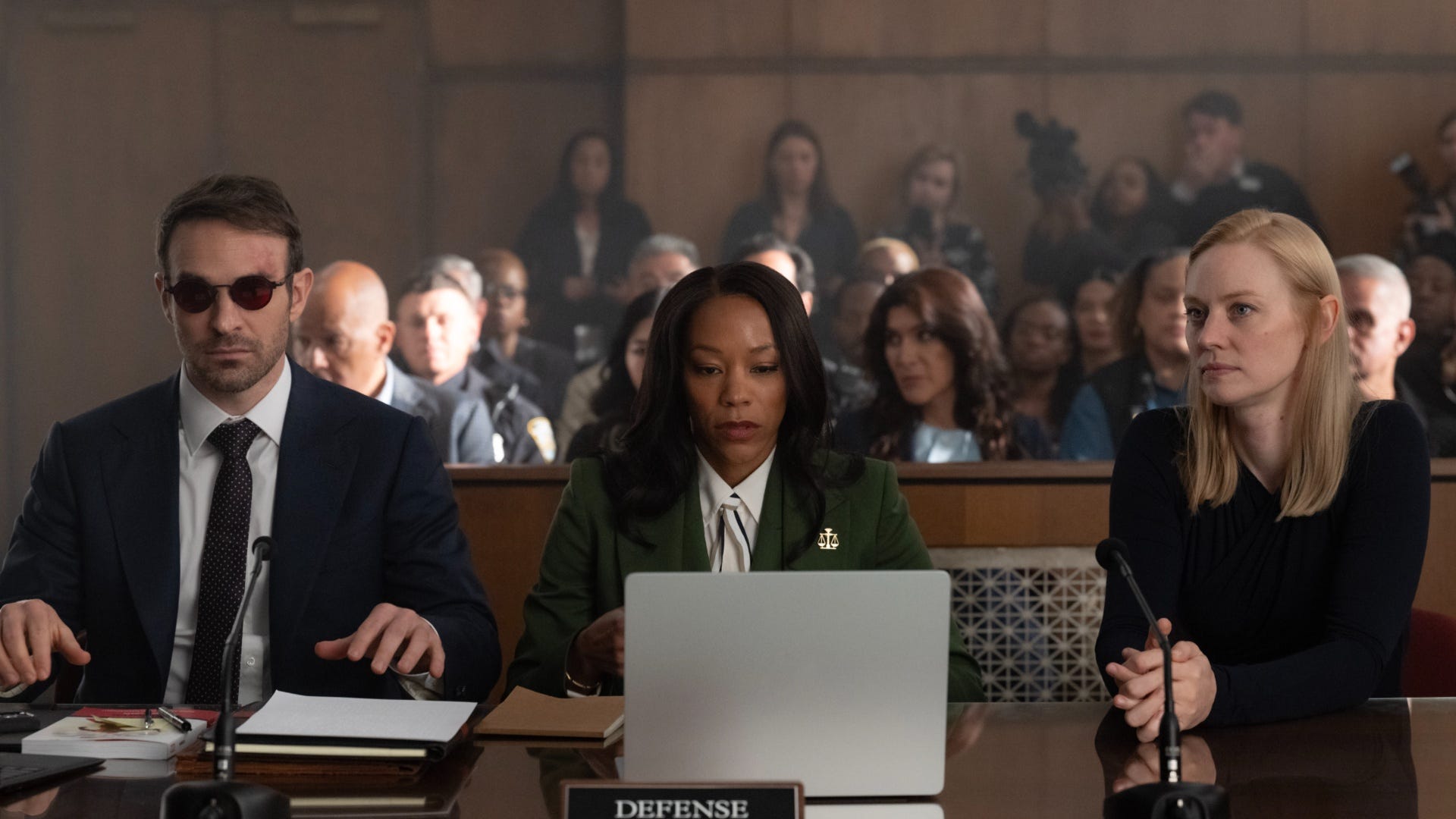
Daredevil is in hiding—lawyer Matt Murdock has been declared “missing”—with Karen Page. They continue their standard underdog scheming to take down antagonists who outnumber them, outgun them, and have near-total control of the justice system through which the duo seeks to destroy them.
I’ll pause here to make the standard complaint that people of my disposition are wont to make: this Disney+ continuation of Netflix’s Daredevil adaptation (2015-2018) is not as religious as its forbear. Sure, Matt Murdock, on occasion, turns to the church for sanctuary, has a priest acquaintance who basically lies for him, and recites prayers for/to/from the saints. Notwithstanding the awesome reel below, this Matt Murdock variant doesn’t feel as catholic in his bones.
Missing from the past two seasons are lengthy (for a TV episode) discussions on the nature of the devil and the form in which he does (or doesn’t) exist, on the good that might come from guilt, or on souls’ damnation, or scenes where the antagonist calmly, frighteningly exegetes one of Jesus’ parables.
Even Daredevil’s debates with Frank Castle over whether it’s okay to kill objectively bad guys hit harder than any of his new conversations with Karen Page about the same thing, despite neither sets of dialogue being specifically religious in nature. The long shadow of the cross cast over the environment of the previous series makes even the fictional world feel different. But I digress.
One place Daredevil: Born Again insists on maintaining some connection to religious conversation is when it comes to justice, mercy, and forgiveness.
In the episode “Requiem,” Karen, frustrated by Daredevil’s rescue of Bullseye after Vanessa’s assassination, argues that maybe Daredevil ought to kill Wilson Fisk, comparing the situation to a Daredevil Season 1 event where she kills Fisk’s then-right-hand man, James Wesley, in self-defense.
“It is not up to us to take a life,” Daredevil insists.
“I pay every day for what I did to Wesley,” Karen replies. “I still have fսcking nightmares! But the difference is I don’t regret it. It was him or me. And what if that’s what it’s like with you and Fisk? Him or you? What if this doesn’t end until one of you goes down?”
“I can’t think about it that way,” Daredevil says.
Well, I can. I can stomach Karen’s desire for retributive justice stemming from frustration and righteous anger. After all, we are five seasons into Fisk’s violence and terror. The enemy is always the same. And when Daredevil is faced with ending it all, he always chooses the high road. Last season, he took a bullet for the man for crying out loud.
Truly, Fisk deserves death. (God forbid these words come back to haunt me.) It seems, to remain sane, we (the audience) cling to a poor sanitized notion of capital punishment and keep it at arm’s length. Our hands must remain clean. And Daredevil thinks his must too.
Another notion the Man Without Fear wrestles with is that of forgiveness, most shown in his conflicted feelings over Bullseye. He can’t bring himself to let Bullseye die; in fact, he intervenes to actively prevent that outcome. In this way, Daredevil is a fool for grace.
Murdock feels guilt over the blind rage that led him to throw Bullseye off a building right after the crack-shot assassin killed Foggy. Completely excusable behavior, in my opinion.
We end up with one person attempting to right past wrongs on behalf of another person who is also attempting to right past wrongs. As Daredevil points out, this is futile: nothing will bring Foggy back. But neither Daredevil nor Bullseye can bring themselves to stop trying to make amends and justify themselves in the sight of each other.
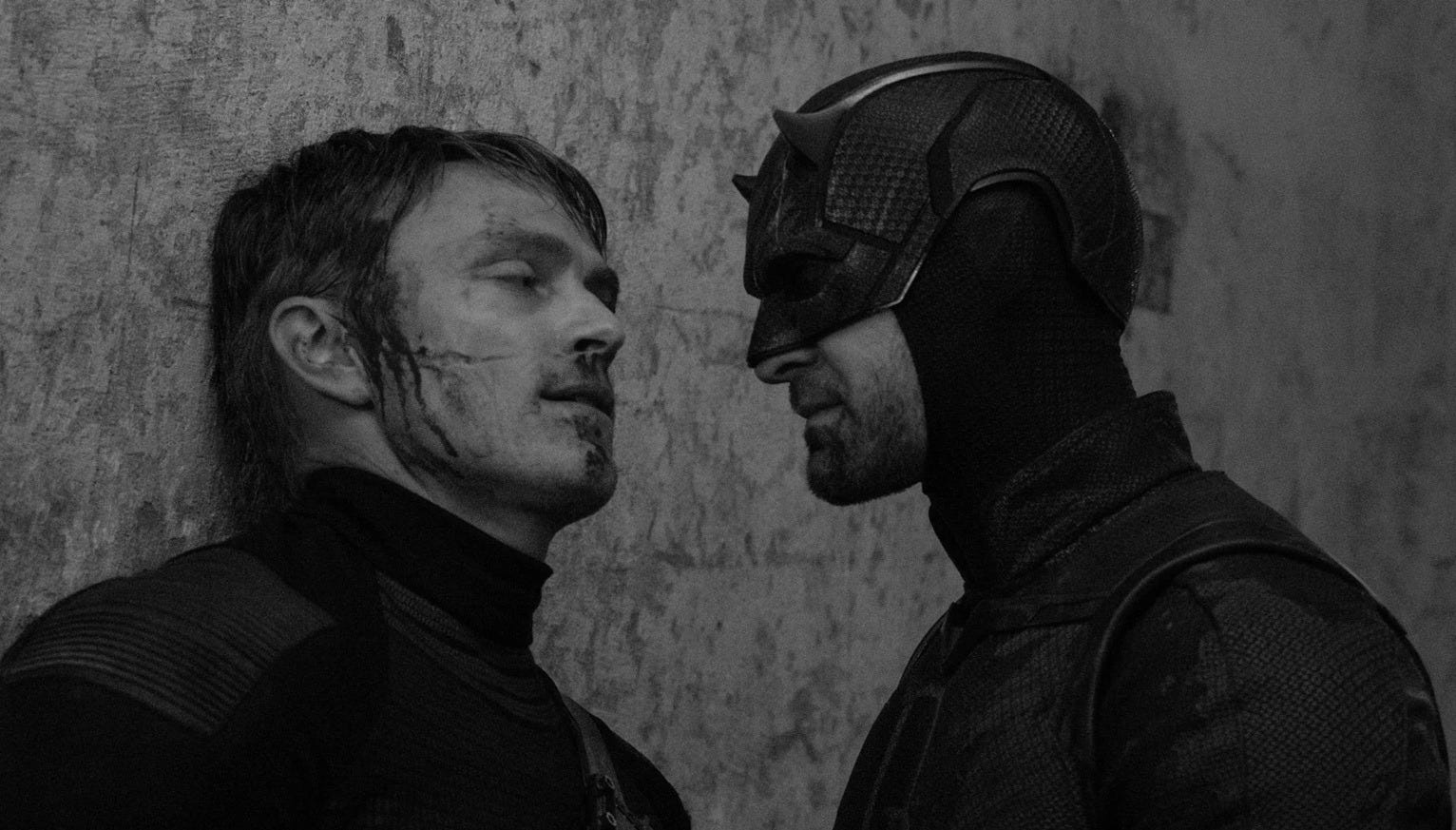
Bullseye’s concept of “good” is balancing the scales by carrying out “one good deed.” Shooting Vanessa was his attempt to erase the wrong that Vanessa had done by hiring him to kill Foggy. But it isn’t enough. Hurt people hurt people. And is one good deed all it takes to stop that cycle?
No, something else is needed. Enter: mercy.
To his credit, Daredevil remains true to his convictions to the very end. And, as much as it sounds like I’m complaining, I really enjoyed this season and love this show and its characters.
As Born Again: Season 2 draws to a close, Daredevil and his allies, including a large contingent of civilians fed-up with Fisk’s regime of terror, are trapped in a courthouse. In this hall of justice, Daredevil persists in showing mercy to Fisk.
But his persistence seems cheap. When Fisk, the white devil, emerges like a modern-day Herod, awash in the blood of innocents—he tore through dozens of citizens, cracking skulls, breaking arms, crushing bodies in his rage—one wonders if, finally, Daredevil might break his one rule.
Alas, he does not. When NYC’s civilians, decked out in horned masks and Daredevil-red clothing, rush Fisk to make an end of him, the Devil of Hell’s Kitchen intervenes. “We’re better than this!” he insists. Once again, he puts his body between Fisk and those seeking to deliver reasonable eye-for-an-eye justice.
Daredevil pleads with Fisk to surrender. “What about grace?” he says.
“You are not allowed to offer that to me!” Fisk cries.
Daredevil even appeals to whatever’s left of Fisk’s better angels. “I believe you love this city. Same as me. We have the opportunity to give it peace. Even if we have none. That’s grace.”
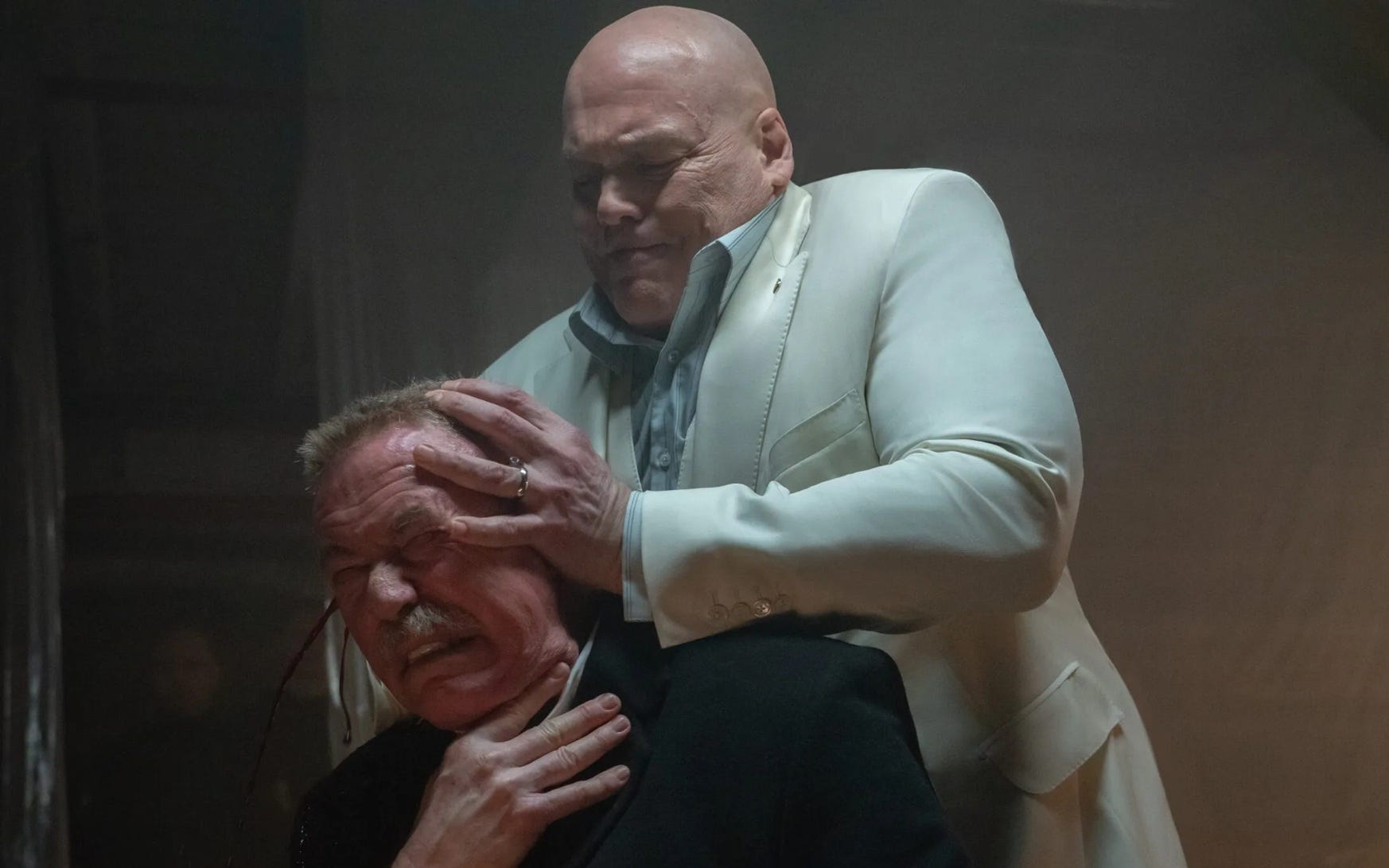
But is it really? Is it really grace to allow a bad man who has proven himself to be a bad man to continue to be a bad man. Are all the lives to which Fisk laid waste over five seasons of television worth it for his final surrender? (Which, according to the laws of superhero television, can’t really be his final surrender.)
I’m a Christian and I’m supposed to say yes. After all, where sin increases, grace ought all the more to increase. And grace can only reign where sin has once reigned (Romans 5:20).
But why, even at this point, can’t we stomach Daredevil killing Fisk or allowing him to be killed? Is it so important to us that we remain unlike the “ill intent who set upon the traveler”? Are our clean hands so important? God forbid we follow in the footsteps of Pilate.
I think what these stories need—more than the “good guys don’t kill” trope—is for the weight of taking a life, regardless of whether that life belongs to a good man or a bad man, to be communicated without being justified or excused. I think a world might exist in which a hero like Daredevil takes guilt on himself that others need not do so—like Batman in The Dark Knight—becoming the necessary evil that others might find evil unnecessary altogether.
This might actually be the most Christian storytelling frame. He who had no sin became sin for us. The innocent took on guilt—not only punishment!—that the would-be (and already) guilty might go free.